
What is Slot Volatility?
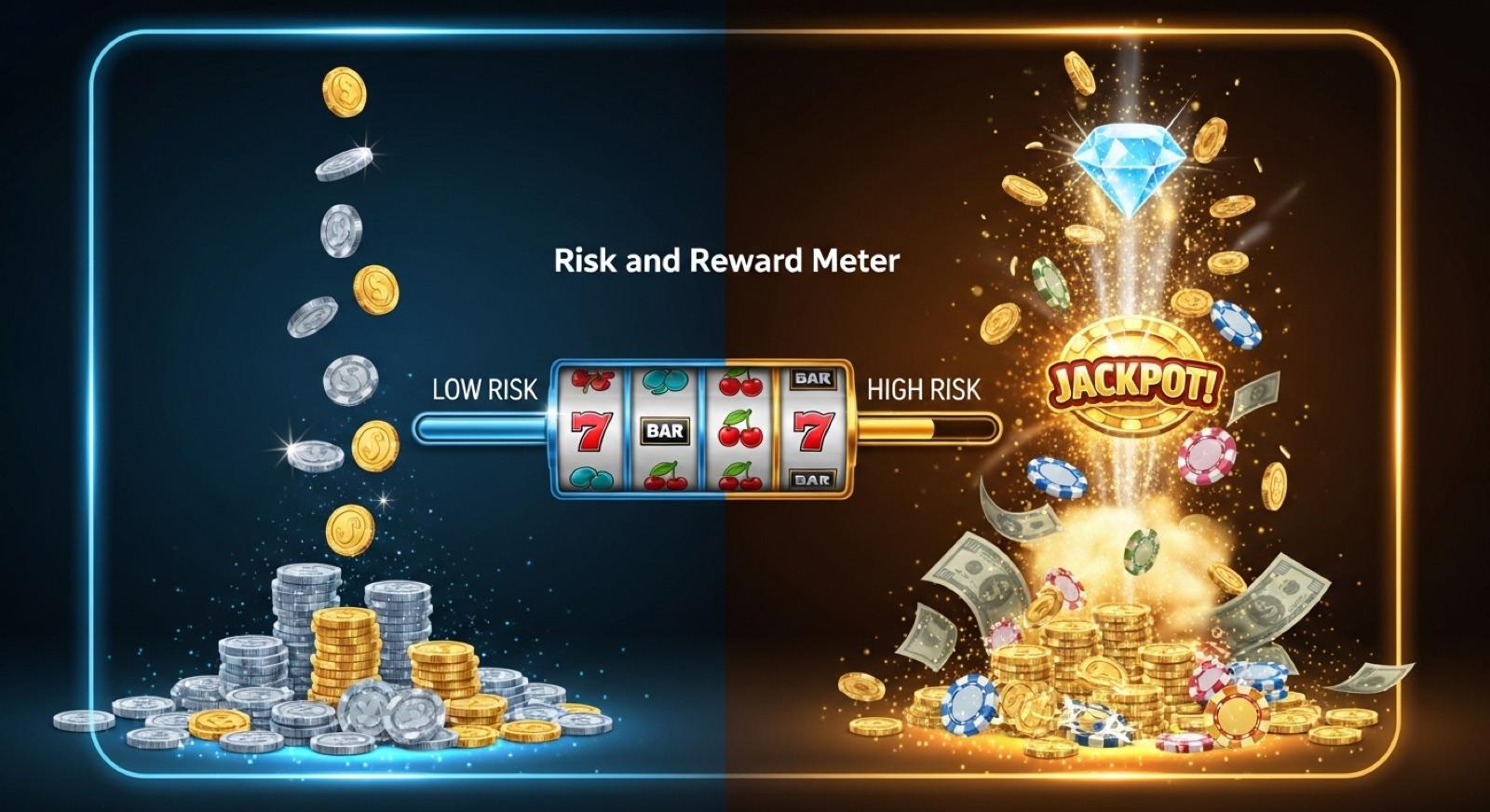
Slot volatility — also called variance — describes the risk level of a slot game and how it distributes payouts over time. In simple terms, it tells you how often a slot pays out and how large those payouts tend to be. It's one of the most critical factors in choosing which slot to play, yet it's often overlooked by casual players.
Low Volatility Slots
Low volatility slots pay out frequently but in smaller amounts. You'll see regular wins landing on nearly every few spins, keeping your balance relatively steady. These games are ideal for players who enjoy longer sessions, prefer lower risk, and want to stretch their bankroll as far as possible. Examples include Starburst by NetEnt and Blood Suckers.
Medium Volatility Slots
Medium volatility slots strike a balance between frequency and size of payouts. You'll experience a mix of smaller regular wins and occasional larger hits. Most players find medium volatility games the most enjoyable because they provide enough action to stay engaged while still offering the chance for meaningful wins. Games like Gonzo's Quest and Dead or Alive fall into this category.
High Volatility Slots
High volatility slots pay out less frequently, but when they do, the wins can be massive. You may go through extended dry spells where your balance dips steadily, but a single bonus round or lucky spin can return multiples of your total investment. Popular high volatility slots include Gates of Olympus, Sugar Rush, and most MegaWays titles.
How Volatility Differs from RTP
RTP (Return to Player) and volatility are related but different concepts. RTP tells you the theoretical percentage of wagered money a slot returns over millions of spins — for example, a 96% RTP means the game returns R96 for every R100 wagered on average. Volatility, on the other hand, describes how those returns are distributed. Two slots can have identical RTPs of 96% but play completely differently — one might pay small amounts constantly (low volatility) while the other saves up for rare but enormous payouts (high volatility).
Volatility and Bankroll Management
Understanding volatility is essential for proper bankroll management. For high volatility slots, you need a larger bankroll to survive the inevitable dry spells and stay in the game long enough to hit the big features. A general guideline is to have at least 200-300x your bet size for high volatility games, compared to 50-100x for low volatility titles. Always set a loss limit before you start playing and stick to it.
How to Check a Slot's Volatility
Most game providers include volatility information in the slot's paytable or rules section, often rated on a scale from 1 to 5 or described as low, medium, or high. You can also gauge volatility by looking at the paytable — if there's a large gap between the highest and lowest paying symbols, the game is likely high volatility. Additionally, slots with large maximum win multipliers (like 10,000x or higher) tend to be highly volatile.
Choosing the Right Volatility for You
There's no universally "best" volatility level — it depends entirely on your playing style, budget, and what you enjoy. If you want relaxed, steady gameplay with frequent small wins, go low volatility. If you love the adrenaline rush of chasing life-changing jackpots and can handle the swings, high volatility is your arena. Most players find their sweet spot somewhere in the medium range, where the balance of risk and reward feels just right.